
The Truth About Misting Houseplants: Does It Really Help?
179 views
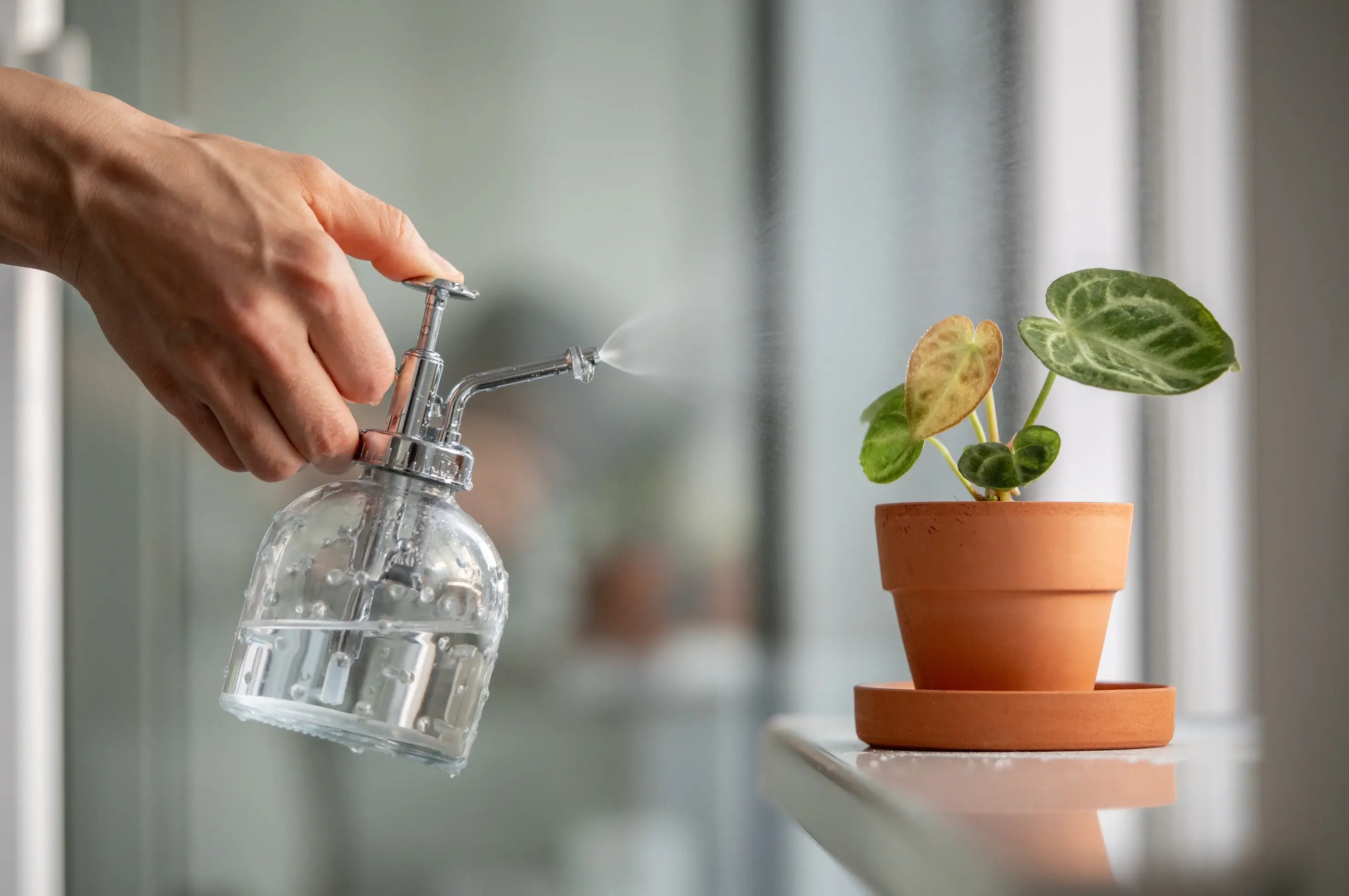
You've probably seen it before. A plant owner grabs a sleek spray bottle, gives every leaf a light mist, and walks away feeling like they've just recreated a tropical rainforest.
It feels right.
Sometimes it even looks impressive on social media, with tiny droplets sparkling across glossy Monstera leaves. Then a week later, the brown leaf edges haven't disappeared, the crispy tips remain, and that supposedly humidity-loving fern still looks miserable.
That's because misting isn't the miracle many people think it is.
After growing everything from peace lilies on apartment windowsills to humidity-demanding Calatheas inside indoor grow cabinets, I've learned that misting solves fewer problems than most beginners expect. Occasionally it helps. Quite often it does almost nothing. Under the wrong conditions, it can even make things worse.
Let's separate gardening tradition from what actually happens inside your home.
Why people started misting plants in the first place
The idea isn't completely wrong.
Many popular houseplants originated in tropical forests where relative humidity regularly stays between 70% and 95%. Orchids, ferns, Anthuriums, Calatheas, Marantas, and many Philodendrons evolved in air that's consistently moist rather than dry.
Compare that with a heated house during winter.
Indoor humidity often drops below 30% once central heating or air conditioning runs continuously. According to guidance from organizations such as the Royal Horticultural Society and the Missouri Botanical Garden, many tropical plants perform better when humidity is increased above typical indoor winter levels.
That's where misting entered the conversation.
The assumption was simple:
Tropical plants like humidity.
Water sprayed on leaves creates humidity.
Therefore, misting should improve plant health.
Reality is a bit more complicated.
What actually happens after you spray a leaf?
Very little.
A fine mist temporarily wets the leaf surface. Those tiny droplets usually evaporate within five to fifteen minutes under normal indoor conditions, especially if your home has heating, ceiling fans, or air movement.
During that short period, humidity rises only in a very small pocket surrounding the leaf.
Then it's gone.
Researchers studying plant microclimates have repeatedly found that these brief humidity spikes disappear quickly unless the surrounding environment already traps moisture. In a typical living room, one spray bottle simply can't change the humidity of hundreds or thousands of cubic feet of air for more than a few minutes.
Think about spraying perfume into a room. You notice it immediately. Fifteen minutes later, the effect has faded.
Humidity behaves similarly.
The biggest misunderstanding about humidity
Humidity isn't about wet leaves.
It's about the moisture content of the surrounding air.
Relative humidity (RH) measures how much water vapor exists compared with the maximum amount air can hold at a specific temperature. Most affordable digital hygrometers—models from Govee, ThermoPro, or SwitchBot often cost between US$10 and US$25—display RH as a percentage.
Here's a practical reference.
Relative Humidity | Typical Indoor Effect |
|---|---|
Below 30% | Dry air, crispy leaf tips become common |
40–60% | Comfortable for people and most houseplants |
60–70% | Excellent for many tropical species |
Above 75% | Great for some rare plants, but mold risk increases indoors |
Spraying leaves doesn't permanently move your room from 30% RH to 60% RH.
Running a humidifier for several hours can.
Cases where misting actually helps
Not never.
Just less often than people imagine.
Freshly mounted orchids sometimes benefit from light misting between watering because exposed roots dry rapidly.
Certain epiphytic plants absorb small amounts of moisture through aerial roots.
Some moss poles wrapped with sphagnum moss also benefit from periodic misting since the goal is keeping the moss damp rather than increasing room humidity.
There's another advantage people rarely mention.
Misting can help remove light dust before wiping foliage clean. Dust blocks light, and cleaner leaves photosynthesize more efficiently.
Even then, I usually finish by gently drying the leaves instead of leaving them soaked.
Situations where misting causes problems
This catches plenty of new plant owners.
Water sitting on foliage for long periods creates favorable conditions for fungal diseases, especially where airflow is poor.
African violets provide a classic example. Water remaining on fuzzy leaves may leave spotting or encourage rot if temperatures are cool.
Succulents aren't fans either.
Plants adapted to deserts generally prefer dry foliage and excellent air circulation.
Another overlooked issue appears with tap water.
Hard water contains dissolved calcium and magnesium. Once droplets evaporate, white mineral spots remain on leaves. In cities with very hard water, those marks become surprisingly stubborn.
If your local water measures above roughly 180 ppm total dissolved solids (TDS), visible spotting becomes much more likely. Many inexpensive TDS meters used for aquariums or hydroponics can measure this within seconds.
Rainwater or distilled water leaves fewer residues if you decide to mist.
Why your Calathea still has brown edges
This question appears constantly in plant forums.
Someone mists twice every day.
Brown tips continue spreading.
The missing piece? Humidity isn't the only factor.
Leaf edges brown because of several interacting issues:
Irregular watering
Salt buildup from fertilizer
Hard tap water
Low humidity over many weeks
Root stress
Excess direct sunlight
Daily misting addresses only one possible cause—and even then, only briefly.
I've watched people spray a Calathea morning and evening while a nearby hygrometer stubbornly displayed 28% RH all day long.
The plant never experienced genuinely humid air.
Better ways to raise humidity
If your goal is healthier tropical plants, there are more effective options.
Use a room humidifier
This produces the biggest improvement.
Ultrasonic humidifiers commonly sold by brands like Levoit, Honeywell, and Dreo can raise humidity significantly in enclosed rooms when sized appropriately. Small desktop units usually cover around 200–300 square feet, while larger models may handle 500 square feet or more.
Most include automatic humidity settings between 40% and 80%.
That's a measurable improvement—not a temporary one.
Group plants together
Plants naturally release moisture through transpiration.
Several plants clustered together create a slightly more humid microclimate than isolated specimens.
The effect isn't dramatic.
Still, every little bit helps.
Keep airflow balanced
Oddly enough, humidity and airflow work together.
Completely stagnant air encourages fungal disease.
Strong fans dry leaves too quickly.
Gentle air movement usually provides the healthiest compromise.
Measure instead of guessing
This changed how I care for plants more than any spray bottle ever did.
A digital hygrometer immediately tells you whether humidity is actually low.
Without one, you're guessing.
Does misting clean the leaves?
Yes.
Sort of.
Light dust rinses away easily. Sticky residues don't.
Indoor plants gradually collect cooking oils, household dust, and airborne particles. Eventually, those deposits reduce the amount of light reaching leaf tissue.
Instead of frequent misting, I usually wipe larger leaves every month using a soft microfiber cloth dampened with clean water.
The difference is surprisingly noticeable.
Glossy leaves reflect more light and simply look healthier.
The greenhouse difference
Here's why people become confused.
Professional greenhouses often use overhead misting systems.
Surely that proves misting works?
Not exactly.
Commercial propagation systems are carefully engineered.
High-pressure mist nozzles, electronic timers, humidity sensors, ventilation controls, and evaporative cooling all work together. Propagation benches frequently operate with humidity exceeding 85% while maintaining steady airflow and carefully timed mist intervals measured in seconds.
Your household spray bottle isn't recreating that environment.
It's performing one tiny piece of an entire climate-control system.
Those are completely different situations.
Should you stop misting altogether?
Not necessarily.
Ask yourself one question first.
Why are you misting?
If you're cleaning leaves, lightly moistening orchid roots, or keeping a moss pole hydrated, misting makes sense.
If you're trying to permanently raise humidity for a tropical plant sitting beside a heating vent in a room measuring 28% RH...
A spray bottle won't solve it.
A humidifier probably will.
Sometimes the simplest solution isn't the oldest gardening habit. It's the one you can actually measure.
Frequently Asked Questions
Does misting increase humidity enough for tropical plants?
Only for a few minutes around the immediate leaf surface. It doesn't significantly change room humidity under normal household conditions.
Is distilled water better for misting?
Yes. Distilled or rainwater reduces mineral spotting caused by hard tap water and leaves fewer visible deposits after droplets evaporate.
How often should I mist orchids?
It depends on the species, growing medium, temperature, and airflow. Mounted orchids generally dry faster than potted ones and may benefit from occasional misting between regular watering sessions.
Can misting prevent spider mites?
Not reliably. Spider mites prefer dry environments, but occasional misting alone won't eliminate infestations. Regular inspection, leaf cleaning, proper humidity, and appropriate pest treatment remain far more effective.
What's the ideal humidity for most houseplants?
Many common houseplants thrive between 40% and 60% relative humidity. Tropical species such as Calatheas, Marantas, and some ferns often appreciate 60% to 70%, provided airflow remains adequate and leaves don't stay wet for extended periods.
One practical change to try this week
Before reaching for the spray bottle again, spend a few dollars on a digital hygrometer and measure your indoor humidity for several days. You may discover your plants already have perfectly acceptable conditions—or you might find that consistent humidity from a properly sized humidifier does far more than months of daily misting ever could.
misting plants
humidity
tropical plants
houseplant myths
indoor gardening
plant care
Found this helpful? Share it!